Sunflower Wine (2)
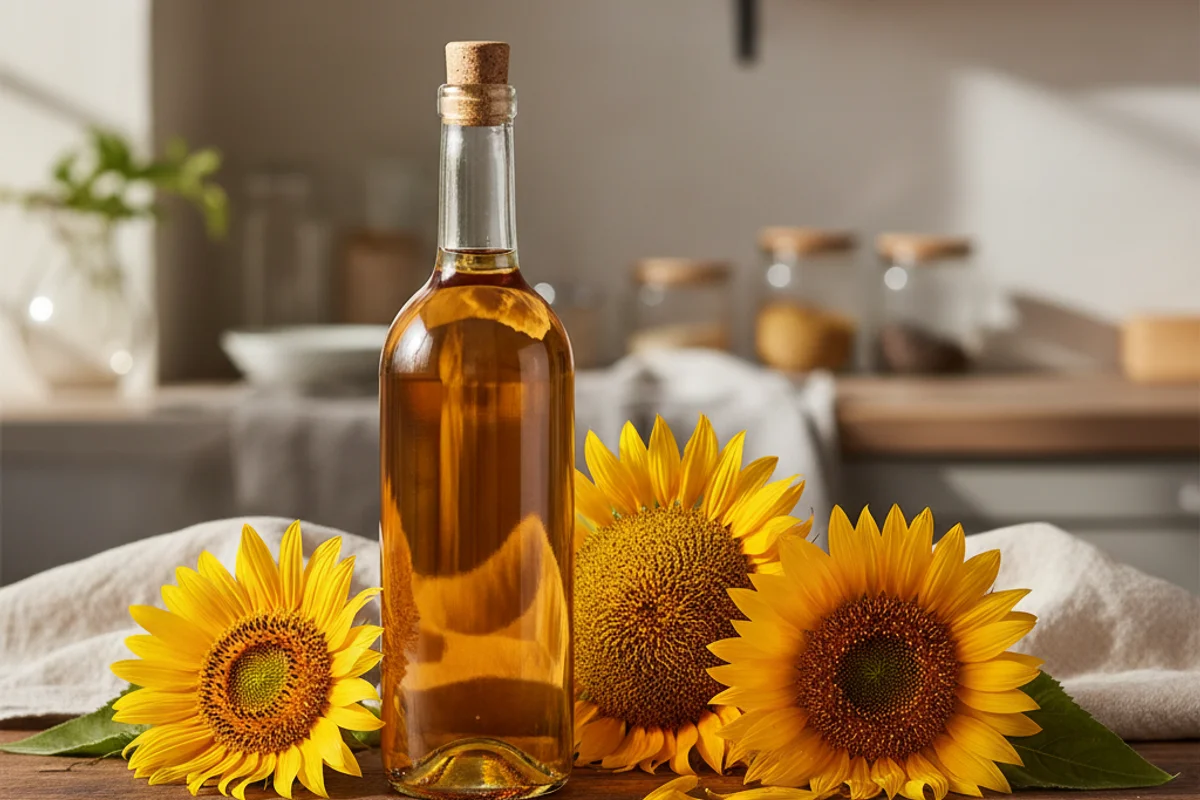
Sunflowers are not just for looking at. Their petals carry a quiet, honey-like floral character that translates surprisingly well into wine — especially when you back them up with white grape juice concentrate and fresh citrus. The result is a pale, delicate white with a faint sweetness and a clean, summery finish. Think of it as a garden in a glass, minus the dirt.
The beginner trap: New winemakers often skip the weighted straining bag trick and let loose petals float freely, which makes the must nearly impossible to strain cleanly and can leave bitter plant material in the wine.
Ingredients
- 2 quarts sunflower petals, fresh and washed
- 1 can (11 oz) Welch’s 100% White Grape Juice frozen concentrate
- 1 lb 10 oz granulated sugar
- 2 lemons, juice only
- 3 oranges, juice only
- 1 tsp yeast nutrient
- ½ tsp pectic enzyme
- ½ tsp tannin (powdered wine tannin, found at homebrew shops)
- 6½ pints water
- 1 packet White Burgundy wine yeast (or any dry white wine yeast such as Lalvin 71B)
Method
- In your primary fermenter, combine the grape juice concentrate, sugar, lemon juice, orange juice, yeast nutrient, pectic enzyme, and tannin with the water. Stir thoroughly until the sugar is fully dissolved.
- Cover the fermenter and let it rest for 10–12 hours.
- Prepare your yeast starter by activating the yeast according to packet instructions, then add it to the must and re-cover the fermenter.
- Stir the must twice daily until the most vigorous fermentation (lots of bubbling and foam) begins to settle down — usually 3–5 days.
- Place the washed sunflower petals into a nylon straining bag along with 12 sterilized glass marbles to keep it submerged. Tie the bag closed.
- Submerge the bag in the fermenting must and gently squeeze and dunk it several times each day for 5 days.
- Remove the bag, squeeze it firmly to extract as much liquid as possible, then transfer the liquid to a clean secondary fermenter and fit an airlock.
- After 2 weeks, rack into a clean secondary, top up to minimize headspace, and refit the airlock.
- Once the wine clears, wait 2 more weeks, then rack again into a clean secondary that already has 1 crushed Campden tablet in it.
- Rack every 2 months for the next 6 months, adding 1 crushed Campden tablet every other racking. At the final racking, add potassium sorbate to stabilize the wine.
- Wait one more month, then rack into bottles. Age at least 6–12 months before drinking.
Why this works
Sunflower petals are low in sugar and flavor compounds on their own, so this recipe does something smart: it uses white grape juice concentrate as a backbone, lending body and fermentable sugar while staying neutral enough not to overshadow the flowers. The pectic enzyme breaks down plant cell walls, freeing more aromatic compounds from the petals and preventing a hazy final product. Tannin — naturally present in grape skins but nearly absent in flower petals — gets added directly to give the wine some structural grip. The repeated racking with Campden tablets controls oxidation and microbial spoilage over the long aging window, which is exactly what this light, delicate style needs to develop properly.
Notes
If you cannot find powdered wine tannin, a very strong cup of plain black tea (cooled) can substitute — use about 4 oz. Frozen sunflower petals can work if you collected and froze them yourself; commercial frozen flowers are not recommended due to preservatives. If White Burgundy yeast is unavailable, Lalvin 71B or EC-1118 are easy to find online or at homebrew supply stores and work well here.