Tinned Blueberry, Blackberry, Raspberry, or Cherry Wine
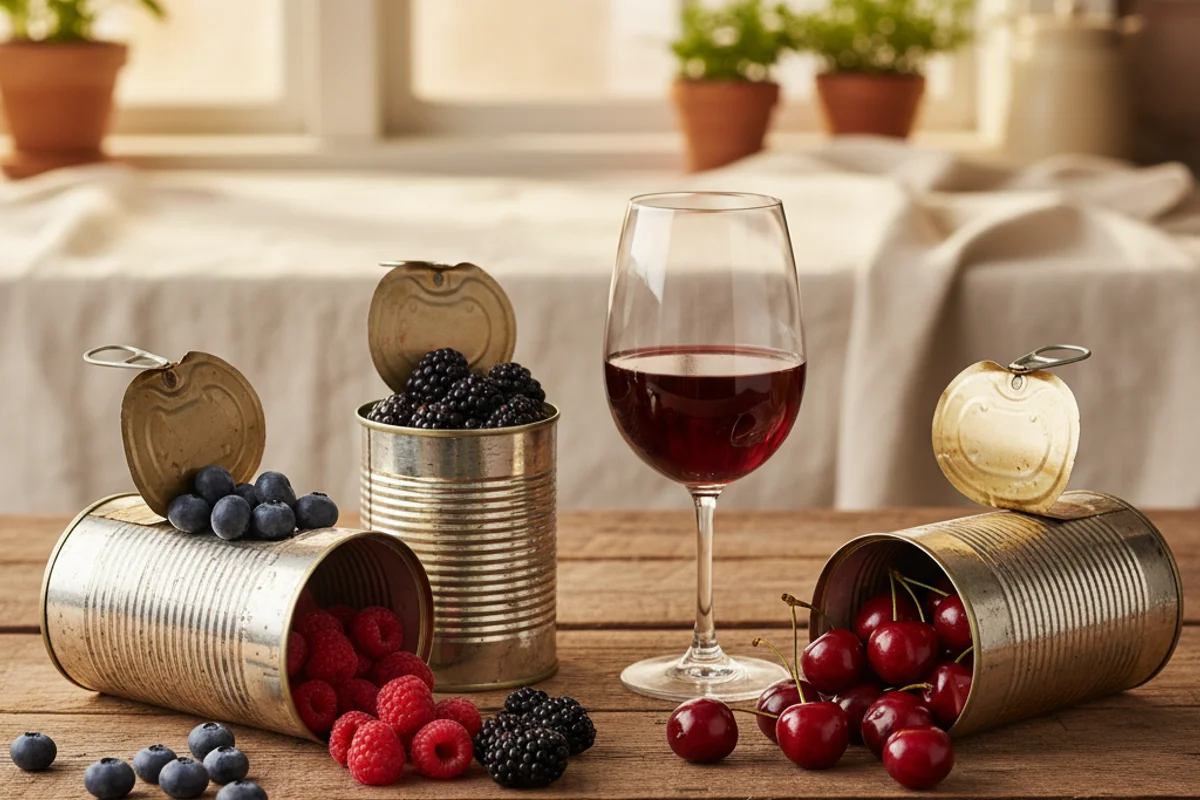
Fresh fruit is great — when you can get it. But a canned blueberry, blackberry, raspberry, or cherry still carries real flavor, real color, and real fermentable sugars. The light syrup it’s packed in isn’t just filler; it’s a head start on your sugar load. With the right yeast, a little acid balance, and some patience, these pantry-shelf cans can produce a fruit wine that’s genuinely worth drinking — and worth waiting for.
The beginner trap: Squeezing the fruit bag to get every last drop of juice will push bitter, astringent compounds into your wine — just let it drip drain on its own.
Ingredients
Blueberry or Blackberry Wine
- 2 × 16 oz cans blueberries or blackberries in light syrup
- 1¾ lbs (about 3½ cups) granulated white sugar
- 3½ quarts water
- 2 tsp acid blend (or 1½ tsp citric acid + ½ tsp tartaric acid as a substitute)
- ⅛ tsp grape tannin (or 1 strongly brewed black tea bag, steeped and cooled)
- 1 tsp yeast nutrient
- ½ tsp pectic enzyme
- 1 packet Montrachet wine yeast (or any dry wine yeast such as EC-1118 or Lalvin 71B)
Raspberry Wine
- 2 × 16 oz cans red or black raspberries in light syrup
- 1¾ lbs (about 3½ cups) granulated white sugar
- 3½ quarts water
- 1½ tsp acid blend
- ⅛ tsp grape tannin (or 1 black tea bag, steeped and cooled)
- 1 tsp yeast nutrient
- ½ tsp pectic enzyme
- 1 packet Montrachet wine yeast
- ⅓ cup granulated white sugar (for back-sweetening at bottling)
Cherry Wine
- 2 × 16 oz cans pie cherries — not cherry pie filling
- Sugar: 1¾ lbs if canned in water or heavy syrup; 2 lbs if canned in light syrup
- 3½ quarts water
- 1 tsp acid blend
- 1 tsp yeast nutrient
- ½ tsp pectic enzyme
- 1 packet Montrachet wine yeast
Method
- Heat the water until hot but not boiling — around 160–170°F (70–77°C). You want to dissolve sugar easily without cooking off volatile aromatics.
- Drain the syrup (or liquid) from the cans into a separate bowl and set it aside. Place the fruit into a nylon straining bag, tie the top closed, and set the bag in your primary fermentation vessel (a food-grade bucket works perfectly).
- Add the sugar to the hot water and stir until fully dissolved, then pour in the reserved can syrup.
- Pour the sugar-syrup mixture over the bagged fruit in the primary. Cover loosely with a clean cloth and let it cool to room temperature — about 4 hours.
- Once cooled, stir in the acid blend, grape tannin, yeast nutrient, and pectic enzyme. Re-cover and wait 12 hours.
- Sprinkle the yeast over the surface, stir gently, and re-cover. Ferment at room temperature for 5 days, pushing the fruit bag down into the liquid twice a day.
- Check the specific gravity (SG) with a hydrometer. When it reads 1.020, lift the bag out and let it drip drain over the bucket — do not squeeze. Discard the spent fruit or repurpose it as jam.
- Let the wine settle overnight, then rack (siphon) it into a clean secondary vessel such as a glass carboy. Top up to reduce headspace and fit an airlock.
- Blueberry/Blackberry: Rack after 2 months, then again 2 months later. Once you are certain fermentation has stopped, bottle. If unsure, wait another 2 months before bottling, or stabilize with potassium sorbate + campden tablet, wait 10 days, then bottle. Best after 9 months.
- Raspberry: Rack every 2 months for a total of 3 rack cycles. Stabilize the wine, wait 10 days, rack into a clean vessel, dissolve ⅓ cup sugar directly into the wine, then bottle.
- Cherry: Rack every 2 months for a total of 3 rack cycles. Stabilize the wine, wait 10 days, then either bottle as-is or sweeten to taste in a clean vessel before bottling. Drinkable at 6 months; improves with age.
Why This Works
Canned fruit has already been heat-processed, which bursts cell walls and makes color and flavor compounds easy to extract — you’re essentially getting a head start that fresh fruit requires crushing and maceration to achieve. The pectic enzyme breaks down pectin (a natural gelling agent in fruit), which would otherwise leave your finished wine hazy and dull. Acid blend fine-tunes the pH into the range where yeast thrive and where the wine tastes balanced — not flat, not sharp. Grape tannin adds a small structural backbone that berry wines often lack on their own, giving the finished wine something to grip onto as it ages. Together, these additives aren’t chemistry tricks; they’re just filling in what the canning process and low-tannin fruits left behind.
Notes
If you can find frozen blueberries, blackberries, raspberries, or tart cherries at your grocery store, they work even better than canned — thaw them completely before use and skip the step of reserving the syrup (just use all water and adjust sugar accordingly). For cherry wine, double-check your cans: you want plain pie cherries packed in water or syrup, not pre-sweetened cherry pie filling loaded with thickeners and spices. Acid blend is sold at homebrew shops; if it’s not available locally, a measured mix of lemon juice and cream of tartar can stand in for small batches, though results will vary.