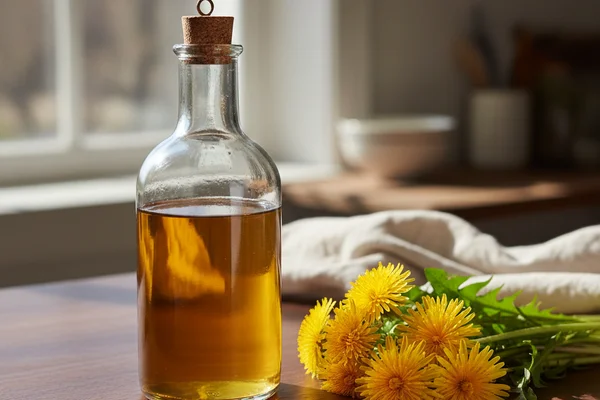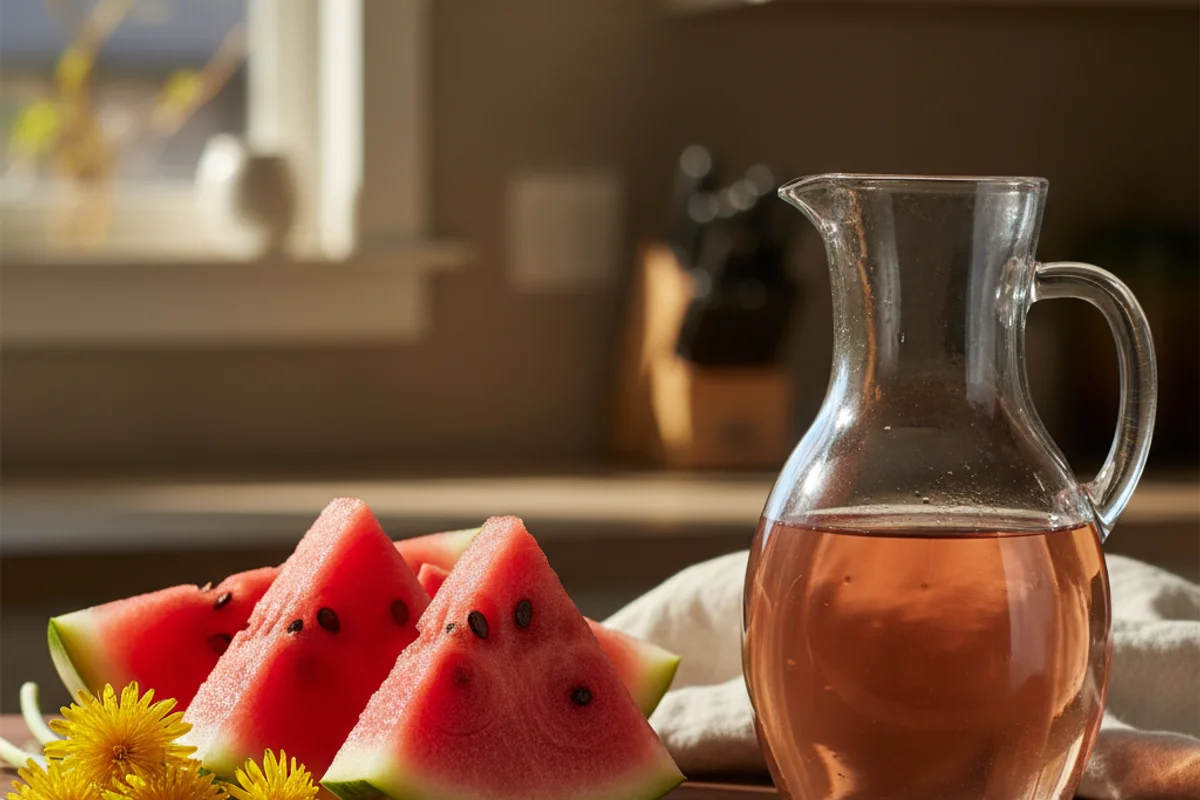
Watermelon-Dandelion Wine (makes 1 gallon)
Summer in a bottle — that’s the only way to describe this one. Watermelon brings a pale, juicy sweetness, and dandelion petals layer in a faint floral note that you’d never guess came from a lawn weed. The result is a light, dry wine with a delicate color somewhere between blush and gold. It’s the kind of thing you open on a hot evening and immediately wish you’d made more of. Give it a full year to come together, and it rewards the wait with something genuinely unique.
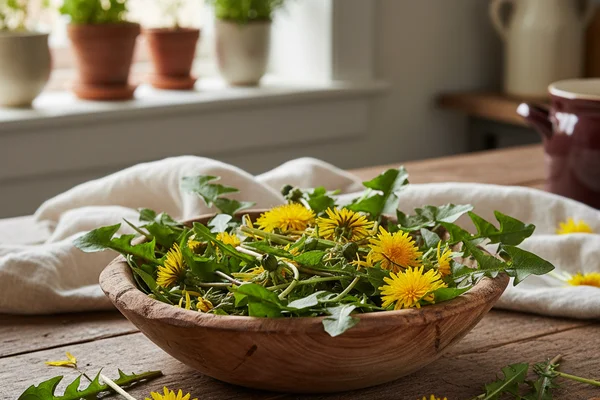
The beginner trap: Leaving any green dandelion material — stems, sepals, or the base of the flower — in the steep will push harsh, bitter flavors into the finished wine that no amount of aging will fix.
Ingredients
- 8–10 cups fresh watermelon juice (from 1 large watermelon, seeds removed before juicing)
- 3 cups dandelion petals, green parts fully removed (picked mid-morning when fully open)
- 4 cups granulated white sugar
- 1 quart water (for the dandelion steep)
- ¼ cup golden raisins, finely chopped (adds body and a touch of tannin)
- Juice of 1 lemon
- Juice of 1 orange
- 1 tsp acid blend (or an extra squeeze of lemon if you can’t find it)
- 1 tsp yeast nutrient
- 1 Campden tablet, crushed
- 1 packet Champagne or Sauterne wine yeast
Method
- Bring 1 quart of water to a boil, pour it over the dandelion petals in a large bowl or crock, cover, and let steep for 3 days.
- Strain the dandelion liquid through a fine mesh strainer or nylon straining bag, pressing gently, and set the liquid aside — discard the spent petals.
- Juice your watermelon by blending the flesh and straining out pulp and seeds; you want as much clear juice as possible.
- In your primary fermentation vessel, combine the watermelon juice, dandelion liquid, lemon juice, and orange juice, then top up with plain water until you reach 1 gallon total.
- Add the sugar, chopped raisins, acid blend, yeast nutrient, and crushed Campden tablet; stir well until the sugar fully dissolves.
- Cover the vessel with a clean cloth and let it sit for 24 hours — this gives the Campden tablet time to do its sanitizing work before yeast goes in.
- Sprinkle in the yeast, stir to combine, and stir once daily for 7–10 days; the raisins will slowly give up their body and nutrients to the must.
- Strain out the raisins, let the must settle for another 24 hours, then rack (siphon) into a clean secondary fermentation vessel and fit an airlock.
- After 4 weeks, rack again into a clean vessel; wait another 4 weeks, then rack one more time.
- Once the wine runs clear, rack a final time and bottle — sweeten to taste first if you prefer an off-dry style (use a stabilizer like potassium sorbate if you do).
- Age in the bottle for at least 1 year before opening.
Why this works
Watermelon juice is almost entirely water with dissolved sugars and a small amount of acids — it ferments willingly but contributes almost no tannin or body on its own. That’s where the raisins punch in: their concentrated sugars feed the yeast, and their skin tannins give the wine just enough structure to hold together during aging. Dandelion petals bring aromatic compounds — mostly flavonoids and trace terpenoids — that survive fermentation and show up as a subtle floral note in the finished wine. Because tannin levels are still very low overall, this wine has a shelf life of about 3 years; beyond that, without tannin to act as a natural preservative, it begins to fade.
Notes
If you can’t find acid blend at a homebrew shop, an extra half-teaspoon of lemon juice per cup of must works as a reasonable stand-in. Frozen watermelon flesh thawed and strained is a perfectly good substitute for fresh — it actually breaks down easier and gives up more juice. If dandelions aren’t available, edible calendula petals (sold at some grocery stores and online) can fill a similar floral role, though the flavor profile will shift slightly.