winemaking: gorse wine
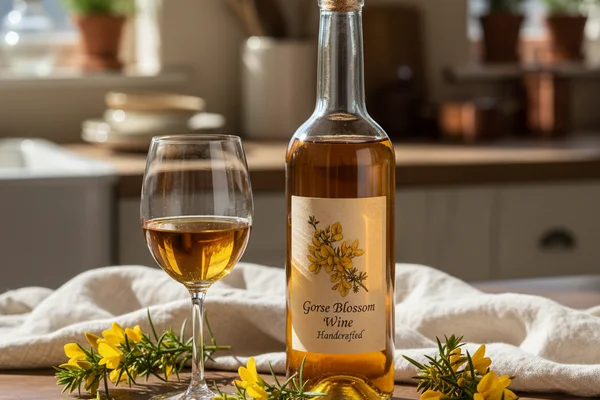
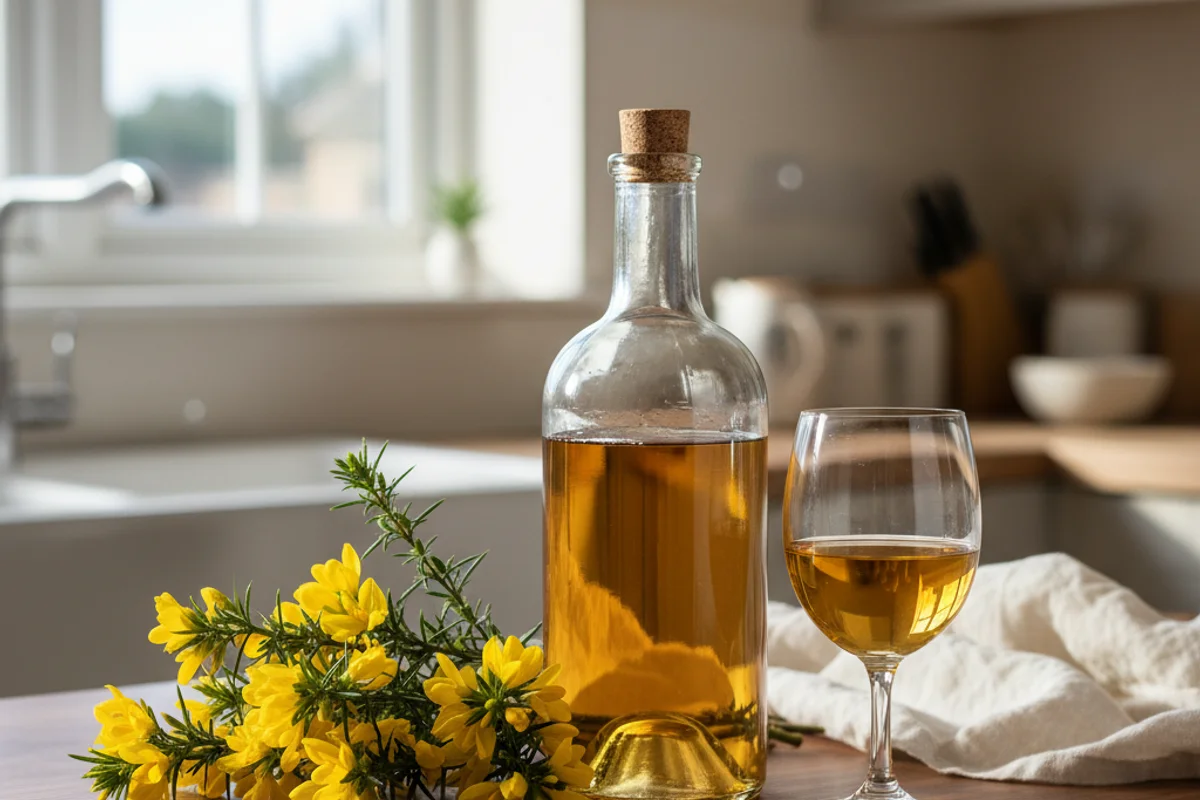
Gorse is the shrub that smells like a coconut macaroon left in the sun — sweet, rich, and slightly tropical. Those bright yellow flowers, blooming hardest in spring on spiny, almost cactus-like bushes, carry an aroma that translates into a wine unlike anything you’ll find on a store shelf. The result is light, fragrant, and just off-dry, with a floral character that makes people stop mid-sip and ask what they’re drinking. Getting there takes patience, but the process itself is straightforward.
The beginner trap: Rushing the racking schedule — this wine needs multiple rests and rack-offs to drop its haze and mellow out, and skipping even one shortcut will leave you with a cloudy, harsh result.
Ingredients
- 12 cups gorse flowers, freshly picked
- 7 pints water, divided
- 2 lbs granulated white sugar, divided
- 1½ cups seedless white raisins, roughly chopped (golden raisins work fine)
- 2 oranges, zest and juice
- 2 lemons, zest and juice (or ¼ oz citric acid)
- ⅛ tsp grape tannin (or 1 cooled cup of strong plain black tea)
- 1 tsp yeast nutrient
- 1 packet Lalvin EC-1118 yeast (or any champagne-style yeast)
Method
- Place the gorse flowers directly into your primary fermenter.
- Combine half the water, half the sugar, and the chopped raisins in a pot; bring to a boil and hold for 1–2 minutes, then pour the hot liquid over the flowers.
- Peel the zest from the oranges and lemons in thin strips — no white pith — and add the zest to the fermenter; squeeze in the juice but leave the pulp behind.
- Add the tannin and stir everything well.
- Pour in enough cold water to bring the total volume to 1 gallon, then let the must cool to 90°F or below.
- Activate the yeast according to the packet, then stir it in along with the yeast nutrient; cover the fermenter loosely.
- Ferment for 3 days, stirring twice daily; on day 3, add the remaining sugar and stir until fully dissolved.
- Re-cover and keep stirring twice daily until fermentation slows noticeably or the specific gravity drops below 1.020.
- Strain the must through a fine mesh strainer or cheesecloth into a 1-gallon glass jug (secondary fermenter); fit an airlock and move it somewhere warm.
- Rack off the sediment after 30 days; rack again once the wine runs clear, then wait another month and rack one more time.
- Stabilize the wine with potassium sorbate and potassium metabisulfite; wait 30 days, then sweeten to a specific gravity of 1.004–1.006.
- Wait an additional 30 days to confirm no re-fermentation, then rack into bottles and age at least 6 months before opening.
Why this works
Gorse flowers are loaded with aromatic compounds but bring almost no acid, tannin, or fermentable sugar on their own — they’re basically a scent delivery system. That’s why this recipe builds its body and structure from the outside in. The raisins add unfermentable sugars plus a bit of mouthfeel. The citrus juice supplies tartaric and citric acids to keep the pH in a range where yeast thrive and bacteria don’t. The tannin — whether from a packet or a cup of black tea — gives the wine enough grip to age without going flabby. EC-1118 is a high-tolerance yeast that handles high sugar loads cleanly, which matters here since you’re adding sugar in two stages to keep the yeast from stalling early.
Notes
If you can’t find grape tannin at a homebrew shop, steep one regular black tea bag in a cup of boiling water for 5 minutes, let it cool completely, and use that instead. Gorse flowers don’t freeze especially well, but if you pick in batches you can freeze them in a sealed bag; just expect slightly less aroma in the finished wine. Citric acid (¼ oz) is a straightforward swap if fresh lemons aren’t available.