Dandelion and Blackberry Wine
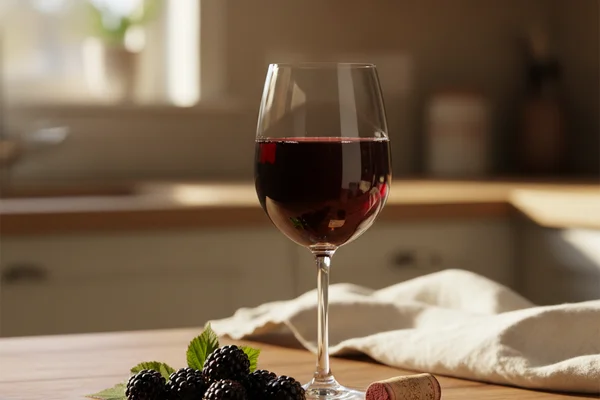
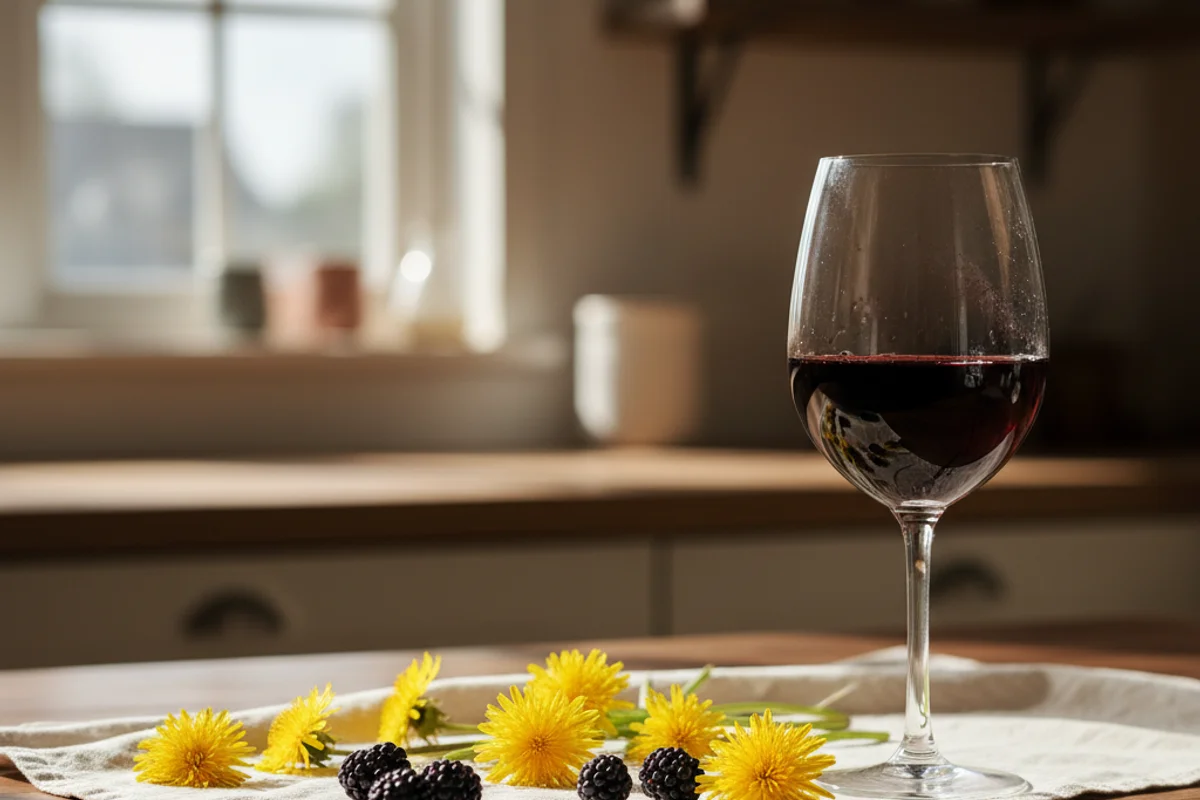
Spring arrives in two acts: dandelions taking over your lawn, and blackberries lurking just around the corner of summer. This wine pulls both into the same glass — floral and golden from the petals, dark and jammy from the berries, with citrus threading everything together. The result is something that doesn’t taste like any one ingredient. It tastes like a specific afternoon in May, which is exactly the point. Give it a full year in the bottle and it transforms from promising to genuinely remarkable.
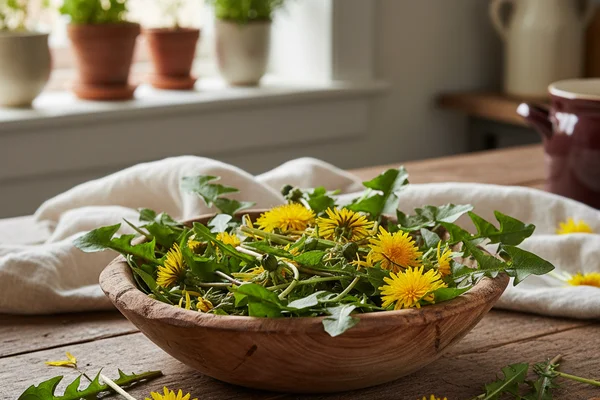
The beginner trap: Using whole dandelion heads instead of petals only — the green parts behind the flower (the calyx and stem) pump bitter compounds into your wine that no amount of aging will fix.
Ingredients
- 2 quarts dandelion petals (green parts removed entirely)
- 2 cups blackberries, fresh or frozen
- 2¼ lbs granulated white sugar
- 1 large lemon
- 1 large orange
- 5½ pints (about 11 cups) water
- 1 tsp yeast nutrient
- 1 Campden tablet, crushed
- ¼ tsp grape tannin (or 1 cooled cup of strong plain black tea)
- 1 packet wine yeast (Lalvin 71B or EC-1118 work well)
Method
- Strip dandelion flowers so only the yellow petals remain — no green bits at all. Set aside.
- Bring the water to a boil. While it heats, use a vegetable peeler to take thin strips of zest from the lemon and orange, avoiding the white pith underneath.
- Cut away and discard all pith from both fruits, then slice the flesh into thin rounds.
- Place the petals, citrus slices, citrus zest strips, and blackberries into a nylon straining bag. Tie it shut and drop it into your primary fermenter.
- Add the sugar directly to the fermenter, then pour the boiling water over the bag. Stir thoroughly until the sugar is fully dissolved.
- Cover the fermenter and let it cool to room temperature (around 70°F).
- Once cool, stir in the tannin, yeast nutrient, and your activated wine yeast. Cover again.
- Once a day for five days, squeeze the bag firmly and stir the liquid to pull out flavor and color.
- On day five, lift the bag and let it drip drain over the fermenter. Squeeze gently, then discard the spent fruit and petals.
- Dissolve the crushed Campden tablet in ½ cup of warm water and stir it into the fermenter. Cover and let fermentation continue.
- Ferment until specific gravity reaches 1.010, typically 14–21 days.
- Rack into a clean secondary fermenter (glass carboy or food-grade jug) and fit an airlock.
- Rack, top up with water to minimize headspace, and refit the airlock every 30 days for the next 90 days.
- After the final racking, add stabilizer (potassium sorbate and another Campden tablet), let the wine settle for two weeks, then rack into bottles.
- Age at least one year before opening.
Why this works
Dandelion petals are almost pure aromatic compounds with very little sugar or acid of their own, which is why citrus does so much heavy lifting here. The lemon adds tartaric and citric acid to keep the pH in a range where yeast thrives and spoilage bacteria struggle. The orange zest contributes aromatic oils that fuse with the floral notes during fermentation. Blackberries bring natural tannins, pigment, and enough body to keep this wine from tasting thin. The added grape tannin (or tea) reinforces structure so the wine can actually age — without it, a delicate flower wine tends to flatten out in the bottle well before that one-year mark.
Notes
Frozen blackberries work just as well as fresh and are available year-round at most grocery stores — thaw them before adding so they release juice faster. If you can’t find grape tannin at a homebrew shop, two tablespoons of strong black tea (cooled) is a practical substitute. Dandelion petals can be collected over several days and frozen until you have the full two quarts — just be sure they’re from lawns that haven’t been treated with herbicides or pesticides.